


Neon Tetra (Paracheirodon innesi)
Neon Tetra (Paracheirodon innesi)
Couldn't load pickup availability
In stock

Current Stock
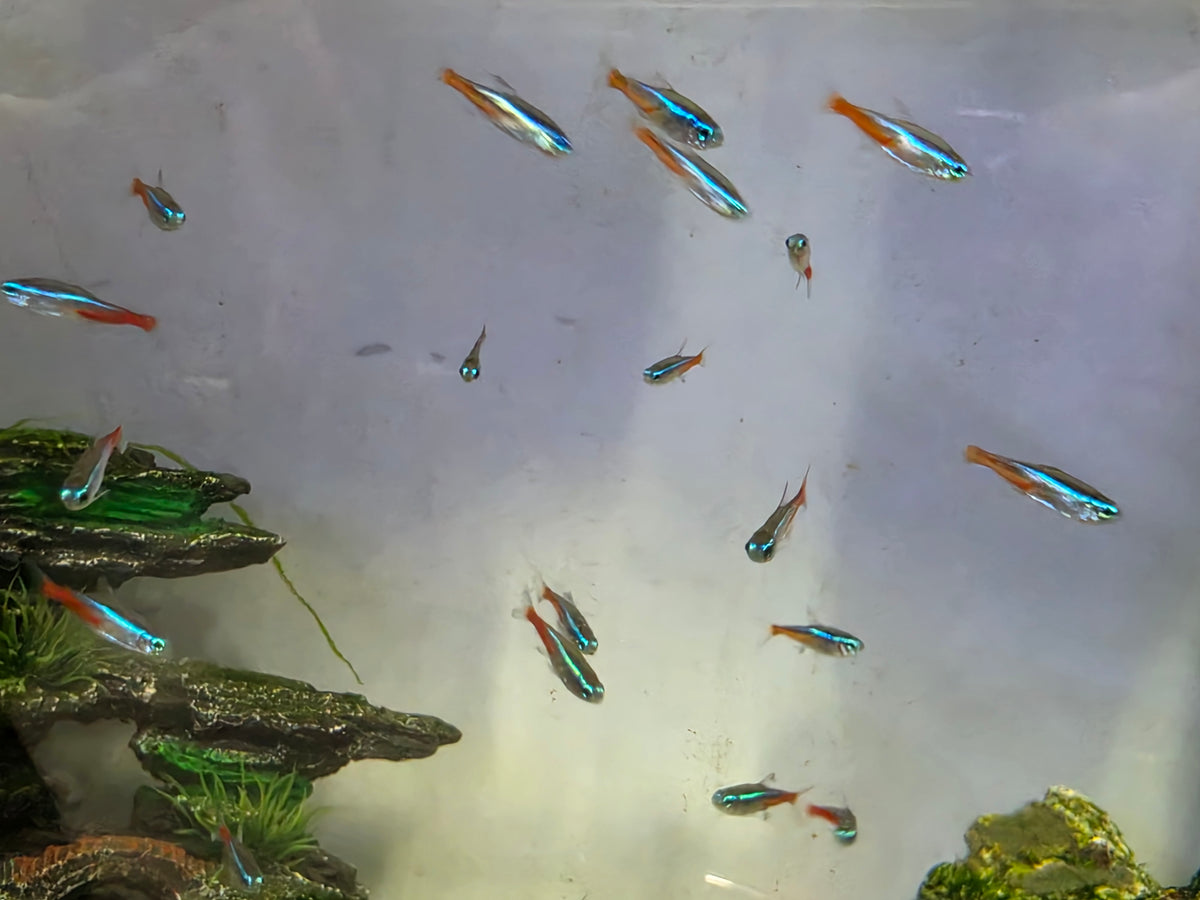
*Note: Images are used as an example only. Due to the nature of live animals, colouration, size and patterns may vary.*
Neon Tetra
Scientific Name: Paracheirodon innesi
Overview
Neon Tetras are one of the most popular freshwater community fish, recognised for their striking blue and red colouration and peaceful schooling behaviour. Their small size and active nature make them an excellent choice for planted and community aquariums. They are social fish that feel most secure and display their best behaviour when kept in a group.
Key Features
-
Bright blue and red iridescent colouration
-
Peaceful and active schooling fish
-
Hardy once established in a stable aquarium
-
Small size makes them suitable for nano and community aquariums
-
Excellent choice for planted aquariums
-
Best kept in groups for natural behaviour and confidence
Care Level: Easy
Neon Tetras are relatively easy to care for once established, provided they are kept in a mature aquarium with stable water conditions. Maintaining good water quality and keeping them in an appropriately sized group will help reduce stress and encourage natural schooling behaviour.
Habitat Requirements
Environment Type: Freshwater
Tank Size: 40+ litres; larger aquariums are recommended for a good-sized school
Temperature: Ideally 22–26°C; tolerates approximately 20–28°C
Water Parameters: pH 6.0–7.5 preferred; stable conditions are most important
Water Hardness: Soft to moderately hard water preferred
Water Flow: Gentle to moderate flow with good oxygenation
Aquascape: Planted aquariums with driftwood, rocks, and shaded areas provide security and replicate aspects of their natural environment. Darker substrates and plants can also help their colours stand out.
Diet
Primary Diet: High-quality tropical fish flakes, micro pellets, or granules
Variety: Frozen or live foods such as brine shrimp, daphnia, and bloodworms can be offered occasionally as part of a varied diet
Flexible Options: They readily accept a range of appropriately sized commercial foods
Feeding Frequency: Small feedings once or twice daily, providing only what can be consumed within a few minutes
Compatibility
Tank Mates: Peaceful community fish of a similar size, dwarf shrimp, snails, and other peaceful schooling species
Avoid: Large, aggressive, or predatory fish that may view Neon Tetras as prey
Temperament: Peaceful and social; most comfortable when kept in groups
Size and Lifespan
Adult Size: Approximately 3–4 cm
Typical Lifespan: 3–5 years with excellent care
Behaviour and Activity
Neon Tetras are active schooling fish that spend much of their time swimming through the middle areas of the aquarium. They naturally remain close to one another and will often form a tight school when they feel threatened or unsettled. In a suitably sized group, they become more confident and will explore the aquarium more freely.
Their bright blue and red colouration is particularly striking under aquarium lighting and against green plants or darker backgrounds.
Special Requirements or Considerations
Neon Tetras should be introduced to stable, fully cycled aquariums with good water quality. Although they are hardy once established, sudden changes in water parameters or poor water quality can cause stress and health problems.
Keeping them in a group is important for their wellbeing. A minimum of 6 is recommended, with larger groups providing more natural behaviour and a stronger visual schooling effect.
When kept with shrimp, adult Neon Tetras are generally peaceful, but very small shrimplets may occasionally be eaten if encountered.
Ideal For
-
Beginners and experienced aquarists
-
Planted and community aquariums
-
Peaceful tropical community setups
-
Aquarists wanting an active schooling species
-
Aquariums where colourful nano fish are desired
Additional Notes
Neon Tetras are a classic community aquarium fish and remain popular due to their vibrant colouration, peaceful nature, and active schooling behaviour. Providing a suitable-sized group, stable water conditions, good filtration, and a varied diet will help them remain healthy and display their best natural behaviour.
